
Manufacturing costs, production capacity, wholesale revenue and investment considerations for starting a fiberglass rebar factory in the United States.
Starting a manufacturing business usually raises two questions: how much money will it take to get started, and how much can the business earn once production begins?
For entrepreneurs considering glass fiber reinforced polymer (GFRP) rebar manufacturing, the answers depend heavily on the production equipment. You do not necessarily need a large industrial complex with multiple production lines to enter the fiberglass reinforcement market.
A manufacturing business can begin with a single automated production line, provided it has the capacity to produce commercially meaningful volumes of reinforcement at a competitive cost. Consider Composite-Tech’s CT6 New Generation. This industrial production line can manufacture six GFRP reinforcing bars simultaneously. When producing 10 mm reinforcement, its documented combined output reaches up to 36 linear meters per minute. That is approximately 118 linear feet of finished reinforcement every minute. What makes this interesting is not just the speed. It is the relationship between production capacity, raw material consumption, operating costs and the selling price of the finished product.
Let’s examine what the economics of a GFRP manufacturing business can look like when it is built around one high-performance production line.
Quick Answer: How Much Does It Cost to Start a GFRP Rebar Factory?
The total investment required to start a fiberglass rebar manufacturing plant depends on the production equipment, industrial premises, utilities, raw material inventory, laboratory requirements and working capital. A single-line factory requires substantially less equipment than a facility operating several independent production systems. However, there is no reliable universal startup price. The cost must be calculated for the selected equipment configuration and factory location.
For a factory equipped with one Composite-Tech CT6 New Generation production line, the key documented manufacturing characteristics include:
| Parameter | CT6 New Generation |
| Simultaneously manufactured reinforcing bars | Up to 6 |
| Supported nominal diameters | 4–24 mm |
| Combined production speed at Ø10 mm | Up to 36 m/min |
| Theoretical production during one 8-hour shift | 17,280 m |
| Production-line operators | 1–2 |
| Normal operating electrical demand | Approximately 18–20 kW |
| Equipment purchase price | Available upon request |
For the 10 mm reinforcement used in this business example, Composite-Tech has provided a verified reference manufacturing cost of approximately $0.15 per linear meter and a reference wholesale selling price of $0.75 per linear meter, excluding delivery. These figures demonstrate a potentially attractive manufacturing spread. They should not, however, be interpreted as guaranteed U.S. factory costs or guaranteed selling prices. Local operating conditions, sales volumes and additional business expenses must be evaluated separately.
Why Start with One GFRP Rebar Production Line?
A common mistake when evaluating a new manufacturing business is assuming that a successful operation must begin with several machines. In reality, the more important question is how much saleable product one machine can manufacture.
A modern automated GFRP production line can combine several operations within one continuous process:
- Glass fiber feeding and preparation;
- Resin impregnation;
- Reinforcing rib formation;
- Polymerization and curing;
- Cooling;
- Continuous pulling;
- Automatic cutting or coiling.
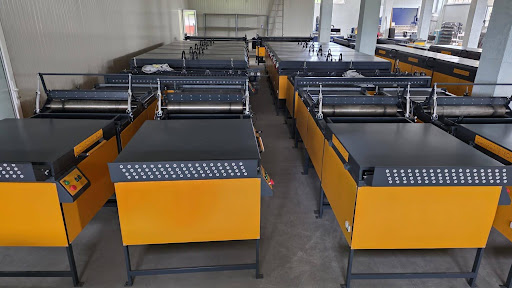
Instead of using separate machines for each reinforcing bar, a multi-strand production system manufactures several bars simultaneously. This increases combined production capacity without necessarily requiring a proportional increase in labor or factory infrastructure. For a new manufacturer, the advantages can be significant. The business can initially concentrate on a limited range of commercially relevant diameters, establish relationships with distributors and contractors, develop a quality control system and expand only when the market justifies additional equipment. One production line can be the foundation of a scalable manufacturing business.
CT6 New Generation: How Much Rebar Can One Machine Produce?
Production capacity is one of the most important factors in manufacturing economics. Composite-Tech’s CT6 New Generation is designed to produce multiple reinforcing bars simultaneously, with the number of active strands depending on diameter.
Its technical documentation provides the following indicative maximum production rates.
CT6 New Generation Production Capacity
| Rebar Diameter | Simultaneous Bars | Combined Production Speed | Theoretical Output per 8-Hour Shift |
| 4 mm | 6 | 48 m/min | 23,040 m |
| 6 mm | 6 | 42 m/min | 20,160 m |
| 8 mm | 6 | 39.6 m/min | 19,008 m |
| 10 mm | 6 | 36 m/min | 17,280 m |
| 12 mm | 4 | 16 m/min | 7,680 m |
| 14 mm | 3 | 10.5 m/min | 5,040 m |
| 16 mm | 2 | 6 m/min | 2,880 m |
| 18 mm | 1 | 2.5 m/min | 1,200 m |
| 20 mm | 1 | 2 m/min | 960 m |
Source: Composite-Tech CT6 New Generation Installation and Operation Manual, 2026. These are manufacturer-declared indicative maximum rates. Actual production depends on raw materials, resin chemistry, curing conditions and operating parameters.
For this article, we will concentrate on 10 mm reinforcement.
The calculation is straightforward.
Six bars × 6 meters per minute = 36 meters per minute.
During one hour: 36 × 60 = 2,160 meters.
During an eight-hour shift: 2,160 × 8 = 17,280 meters.
That means a single production line has a theoretical maximum output of: 17,280 Meters of 10 mm GFRP Rebar per Shift
Or approximately: 56,693 Linear Feet per Shift
Of course, an actual factory will not operate at its theoretical maximum every minute. Production setup, raw material replacement, quality inspections, maintenance and other interruptions affect the amount of saleable reinforcement manufactured. That is why investors should distinguish between equipment capacity and realistic operating utilization. Nevertheless, the documented output demonstrates the industrial production potential of a single CT6 line.
How Much Does It Cost to Manufacture GFRP Rebar?
This is where the business becomes particularly interesting. Manufacturing costs depend on the reinforcing fiber, resin formulation, production technology, electricity, labor and production efficiency.
For 10 mm GFRP reinforcement, Composite-Tech has verified a reference production cost of approximately:
$0.15 per Linear Meter
This reference manufacturing cost includes the principal raw materials, electricity, production labor and taxes included in the underlying operating calculation. It is a company-provided manufacturing reference, not an independently audited industry average or a validated all-in cost for every U.S. state. Local labor rates, electricity tariffs, taxation and operating conditions may change the result. For investors, the important point is that manufacturing cost must be evaluated against the achievable selling price.
Manufacturing Cost vs Wholesale Selling Price
Using the company’s verified reference figures:
| Financial Parameter | Per Meter | Per Linear Foot |
| Reference manufacturing cost | $0.15 | $0.046 |
| Reference wholesale selling price | $0.75 | $0.229 |
| Difference | $0.60 | $0.183 |
The wholesale price excludes delivery. The difference is before any expenses not included in the reference manufacturing-cost calculation.
Consider what happens when a manufacturer sells 1,000 meters of reinforcement.
Sales revenue: 1,000 × $0.75 = $750
Manufacturing cost: 1,000 × $0.15 = $150
Remaining difference: $600 per 1,000 meters
This is not necessarily net profit.
It is the difference between the assumed wholesale selling price and the verified reference manufacturing cost. The business must also account for any expenses not included in that cost, potentially including depreciation, financing, sales commissions, insurance, customer acquisition, distribution and other administrative expenses. Nevertheless, this relationship helps explain why efficient GFRP reinforcement manufacturing can be commercially attractive.
How Much Revenue Can One CT6 Production Line Generate?
A production line can only generate revenue when the manufacturer has customers for the finished product. Therefore, a realistic business model should consider different levels of utilization.
Let’s assume a factory operates:
One CT6 New Generation production line
One eight-hour shift per day
22 scheduled production days per month
10 mm GFRP reinforcement
At the documented maximum production rate, monthly theoretical capacity would be:
17,280 × 22 = 380,160 meters.
However, new manufacturing businesses rarely achieve full utilization immediately.
For this reason, we can examine three illustrative scenarios.
Monthly GFRP Rebar Production and Revenue Scenarios
| Parameter | 40% Utilization | 60% Utilization | 80% Utilization |
| Monthly reinforcement sold | 152,064 m | 228,096 m | 304,128 m |
| Wholesale selling price | $0.75/m | $0.75/m | $0.75/m |
| Potential monthly revenue | $114,048 | $171,072 | $228,096 |
Illustrative sales scenarios. They assume that the stated percentage of theoretical capacity becomes saleable product and that all such product is sold at the stated wholesale price. They are not sales forecasts.
The table illustrates the potential scale of a business operating a single high-capacity production line. At 60% of theoretical capacity, monthly sales could reach approximately 228,000 meters, provided the company has sufficient customer demand and maintains acceptable product quality. This is why the commercial strategy is just as important as the production equipment. A manufacturer must develop customers, distributors and reliable sales channels alongside the factory.
What Could the Manufacturing Business Earn?
Revenue alone does not determine profitability.To understand the potential economics, we must compare sales revenue with manufacturing costs.
Using the reference values of $0.75 per meter for sales and $0.15 per meter for manufacturing:
Illustrative Monthly Production Economics
| Financial Indicator | 40% Utilization | 60% Utilization | 80% Utilization |
| Revenue | $114,048 | $171,072 | $228,096 |
| Manufacturing cost at $0.15/m | $22,810 | $34,214 | $45,619 |
| Difference before additional expenses | $91,238 | $136,858 | $182,477 |
Important: This is a simplified sensitivity calculation, not a forecast of net profit. It assumes that the reference manufacturing cost of $0.15 per meter remains applicable at each utilization level. Actual unit costs may increase at lower utilization because some labor and factory expenses do not decline proportionally with production volume.
The table also excludes any additional expenses outside the verified reference cost, as well as startup losses, financing and capital recovery. The figures should therefore be used to understand the potential relationship between manufacturing output and sales revenue — not as guaranteed monthly earnings. Still, the example highlights the commercial value of manufacturing efficiency. A factory capable of producing more reinforcement with controlled operating costs has greater flexibility when competing on price.
Why CT6 Manufacturing Technology Matters for Profitability
The economics of fiberglass rebar manufacturing depend on more than the number of bars produced simultaneously. Production speed must be supported by consistent resin impregnation, controlled polymerization and reliable cooling. These processes affect both finished-product quality and production efficiency. Composite-Tech has developed specialized technologies to address these challenges.
Patented Ultrasonic-Assisted Resin Impregnation
Continuous glass fiber reinforcement contains thousands of individual filaments. During manufacturing, the polymer resin must penetrate the fiber bundle to create a consistent composite structure. Insufficient impregnation can create internal defects. Excess resin can increase the manufacturing cost without necessarily improving the mechanical performance of the finished bar. Composite-Tech uses an ultrasonic-assisted impregnation system incorporating controlled pneumatic resin squeezing. The ultrasonic technology is intended to improve resin penetration within the fiber bundle, while the squeezing system helps manage excess resin.
This approach is designed to support two important objectives:
- Consistent composite quality and efficient resin consumption.
- Both are relevant to commercial manufacturing.
Short-Wave Infrared Polymerization
Increasing production speed reduces the time a reinforcing bar spends inside the heating system. The resin must still achieve an appropriate degree of cure. Composite-Tech incorporates a short-wave infrared heating stage before the main curing ovens. This technology is intended to accelerate initial heating and support polymerization at industrial production speeds. The heating system works together with the subsequent curing zones. The actual achievable speed depends on the resin formulation, bar diameter and validated curing conditions.
Two-Stage Air-and-Water Cooling
Once polymerization is complete, the reinforcement must be cooled before cutting, coiling or further processing. CT6 uses two-stage cooling. The material first passes through air cooling, followed by water cooling. This process is designed to moderate temperature changes and reduce the risk of cooling-related defects. Together, these technologies support Composite-Tech’s approach to high-output FRP manufacturing. The objective is not simply to pull the material faster. It is to manufacture consistent, saleable reinforcement efficiently.
Electricity and Labor: Two Important Operating Costs
A production line’s efficiency cannot be judged solely by its installed electrical power. The important measurement is how much electricity is consumed for each meter of finished reinforcement.
According to the CT6 New Generation technical documentation, normal operating electrical demand after warm-up is approximately 18–20 kW.
At 10 mm diameter, maximum combined output is 2,160 meters per hour.
Using 20 kW as the operating demand: 20 ÷ 2,160 = approximately 0.0093 kWh/m.
That is approximately: 9.3 kWh per 1,000 meters of reinforcement.
This is a theoretical line-only calculation at the documented maximum production rate. It excludes startup energy, auxiliary equipment, idle time and production losses.
Labor requirements are also relevant. The CT6 technical manual specifies that the production line can be controlled by one or a maximum of two operators. That does not mean the entire business requires only two employees. Other functions may include quality control, raw material handling, logistics, maintenance, sales and administration. However, the ability to control simultaneous production of six reinforcing bars through one integrated system is important for labor productivity.
A manufacturer should always evaluate:
Total labor and electricity costs per saleable meter — not simply the number of employees or the machine’s power rating.
What Equipment and Infrastructure Does a One-Line GFRP Factory Need?
Even when the factory starts with a single CT6 production line, investors must plan the installation carefully. The production process needs a suitable industrial building and supporting infrastructure.
A preliminary startup budget should include the following categories.
| Investment Category | Purpose |
| CT6 New Generation | Main production equipment |
| Industrial building | Space for equipment, personnel and product handling |
| Electrical infrastructure | Suitable power supply and distribution |
| Ventilation | Process ventilation and workplace conditions |
| Compressed air | Supply for pneumatic equipment |
| Raw material storage | Glass fiber and resin inventory |
| Resin preparation area | Controlled material preparation |
| Quality control | Product inspection and testing |
| Material handling | Movement of fibers and finished bars |
| Initial raw materials | Inventory required before production begins |
| Installation and training | Equipment commissioning and operator preparation |
| Working capital | Funds for operations before customer payments arrive |
The CT6 installation drawing supplied with the technical documentation shows a minimum longitudinal equipment arrangement of approximately 36 meters for the illustrated configuration. That does not represent the minimum size of an entire factory. Additional room is required for access, maintenance, utilities, raw materials and finished-product handling. The required facility area must therefore be determined from a project-specific equipment layout.
For a U.S. installation, the electrical configuration also requires particular attention. The documented equipment configuration uses a 380 V, 50 Hz three-phase supply; integration with the available American electrical service must be engineered for the specific project. Ventilation, fire protection, resin storage, occupational safety and any required permits must be addressed under applicable local requirements.
The most efficient approach is to design the factory layout around the selected equipment before committing to a building.
How Much Initial Investment Is Required?
The total startup cost of a GFRP manufacturing plant is not equal to the price of the machine. The equipment is a major component, but a complete investment plan must also include premises, infrastructure, inventory, commissioning, quality control and working capital.
For a single-line CT6 factory, the startup budget should be divided into three groups.
Capital Investment. This includes the production equipment, electrical installation, supporting utilities and any required facility modifications.
Initial Production Setup. This includes raw materials, commissioning, operator training, quality procedures and the first production batches.
Working Capital. This covers expenses that arise before customers pay for delivered reinforcement.
For example, a company may need to purchase glass fiber and resin, manufacture reinforcement and deliver an order before receiving the full sales proceeds. The amount of working capital depends on inventory levels, customer payment terms and the production schedule. There is no reliable way to assign a universal U.S. dollar amount to these categories without knowing the location and operating plan.
Composite-Tech provides equipment pricing and project-specific factory configuration proposals upon request. This allows investors to evaluate the investment based on the actual manufacturing project rather than a generic online equipment price.
How Long Does It Take for a GFRP Rebar Factory to Pay for Itself?
Payback depends on the relationship between the initial investment and the cash generated by the business. The production line’s capacity is only one part of the calculation. Actual payback depends on the achieved selling price, saleable output, operating expenses, financing, taxes and capital investment.
For example, a factory that sells a substantial proportion of its production capacity may recover its investment faster than a factory with the same equipment but limited customer demand.
Similarly, a manufacturer operating in a region with high energy, labor or facility costs may have a different financial result from a manufacturer using the same equipment elsewhere.
A reliable investment model should evaluate at least three scenarios:
- Conservative: slower sales development and relatively low equipment utilization.
- Base case: established customers and moderate utilization.
- Growth case: increasing orders and higher production utilization.
Rather than promising a universal payback period, investors should calculate the return for their proposed factory. The critical advantage of high-output equipment is that it provides greater production capacity without requiring the business to purchase multiple independent lines from the beginning. But that capacity creates value only when the resulting reinforcement can be sold.
Why Product Quality Matters in the United States
Manufacturing inexpensive reinforcement is not enough. To serve serious construction customers in the United States, the finished product must have documented properties appropriate for its intended application.
ASTM D7957/D7957M-26 establishes requirements for qualifying GFRP reinforcing bars, including geometric, mechanical and physical properties, as well as product qualification and production quality control.
ACI CODE-440.11-22 provides structural concrete design requirements for qualifying GFRP reinforcement within its scope. That code specifically references ASTM D7957/D7957M-22; manufacturers and engineers must confirm the applicable editions and adopted requirements for each project.
A production line does not automatically certify the reinforcing bars manufactured on it. Compliance depends on the finished product, testing, quality assurance and applicable project requirements. For investors, this means that quality control and product qualification should be part of the factory business plan from the beginning. A manufacturer that can consistently supply tested and documented reinforcement is better positioned to develop relationships with professional construction buyers.
Why Choose Composite-Tech for a GFRP Manufacturing Business?
Composite-Tech specializes in industrial equipment for manufacturing composite reinforcement. The CT6 New Generation combines simultaneous production of up to six bars with specialized technologies developed for continuous processing of fiber-reinforced polymers.
These include:
- Ultrasonic-assisted resin impregnation;
- Controlled pneumatic resin squeezing;
- Programmable rib winding;
- Short-wave infrared polymerization;
- Multi-stage curing;
- Two-stage air-and-water cooling;
- Automated pulling and cutting;
- Optical production monitoring.
The company also develops equipment for FRP reinforcement mesh and factory-made bent composite elements. This provides a potential expansion path for manufacturers who begin with straight GFRP reinforcement and later decide to broaden their product range.
For an investor, the main objective should be to establish a factory capable of manufacturing consistent reinforcement at a competitive cost. That requires more than purchasing an individual machine. It requires selecting suitable equipment, preparing the facility, validating materials, training operators and developing a market for the finished product.
Composite-Tech can support prospective manufacturers with equipment configuration, preliminary production planning, installation and operator training.
Start Your GFRP Rebar Manufacturing Business with Composite-Tech
A fiberglass rebar factory does not have to begin as a large industrial complex.
For entrepreneurs and manufacturers entering the market, one high-capacity production line can provide a practical starting point.
Composite-Tech’s CT6 New Generation is designed to manufacture up to six reinforcing bars simultaneously, combining automated production with specialized resin impregnation, curing and cooling technologies.
The resulting manufacturing capacity creates an opportunity to develop a competitive reinforcement business — provided the factory maintains consistent quality, controls operating expenses and establishes reliable sales channels.
Planning to start a GFRP rebar manufacturing plant in the United States?
Contact Composite-Tech USA to request:
- CT6 New Generation equipment specifications and pricing;
- A preliminary one-line factory layout;
- Electrical and utility requirements;
- An estimated startup investment structure;
- A project-specific manufacturing cost and profitability assessment.
Composite-Tech USA — Advanced FRP Manufacturing Equipment for Industrial Reinforcement Production.
Frequently Asked Questions
How much does it cost to start a GFRP rebar manufacturing plant?
The total startup investment depends on equipment selection, factory location, building requirements, utilities, laboratory testing and working capital. Composite-Tech provides project-specific CT6 equipment quotations and factory configuration proposals upon request.
Can a GFRP rebar factory start with one production line?
Yes. A manufacturing business can begin with one suitably configured production line. The required investment and commercial strategy depend on its capacity and the target market.
How many reinforcing bars can CT6 produce simultaneously?
CT6 New Generation is designed to manufacture up to six bars simultaneously. The number of active bars depends on the selected diameter.
How much GFRP rebar can CT6 produce in eight hours?
At 10 mm diameter, the documented maximum combined output is 36 m/min, equivalent to a theoretical 17,280 meters during an uninterrupted eight-hour shift.
What is the manufacturing cost of 10 mm GFRP rebar?
Composite-Tech has verified a reference manufacturing cost of approximately $0.15 per linear meter under its documented operating conditions. U.S. manufacturers must recalculate the cost using local materials, labor, electricity, taxes and factory expenses.
What is the wholesale selling price of 10 mm GFRP rebar?
The Composite-Tech business example uses a reference wholesale selling price of $0.75 per meter, excluding delivery. Actual selling prices depend on specifications, order volume, customer requirements and market conditions.
How profitable is GFRP rebar manufacturing?
Profitability depends on sales volume, achieved selling prices, manufacturing costs and additional operating and capital expenses. High-output production equipment can improve unit economics, but neither factory profitability nor return on investment is guaranteed.
How many workers are required to operate CT6?
The production line is designed to be controlled by one or a maximum of two operators. Additional personnel may be required for other factory functions.
Can CT6 manufacture basalt rebar?
Composite-Tech’s manufacturing technology can be configured for different reinforcement fiber systems, including glass and basalt. Material-specific processing conditions and finished-product qualification are required.
Is GFRP rebar accepted for construction in the United States?
GFRP reinforcement is addressed by ASTM product specifications and ACI structural design provisions. Acceptance of a particular product or application depends on the applicable building code, engineering design and product qualification.