
A New Era in Construction Technology
As the construction industry continues to evolve, innovation has become essential to meeting the growing demands for stronger, lighter, and more durable building materials. From modern infrastructure projects to next-generation construction solutions, the industry is constantly seeking technologies that improve performance, efficiency, and long-term reliability. Among the most promising advancements is Glass Fiber Reinforced Polymer (GFRP), a composite material that offers significant advantages over conventional steel reinforcement in a wide range of applications.
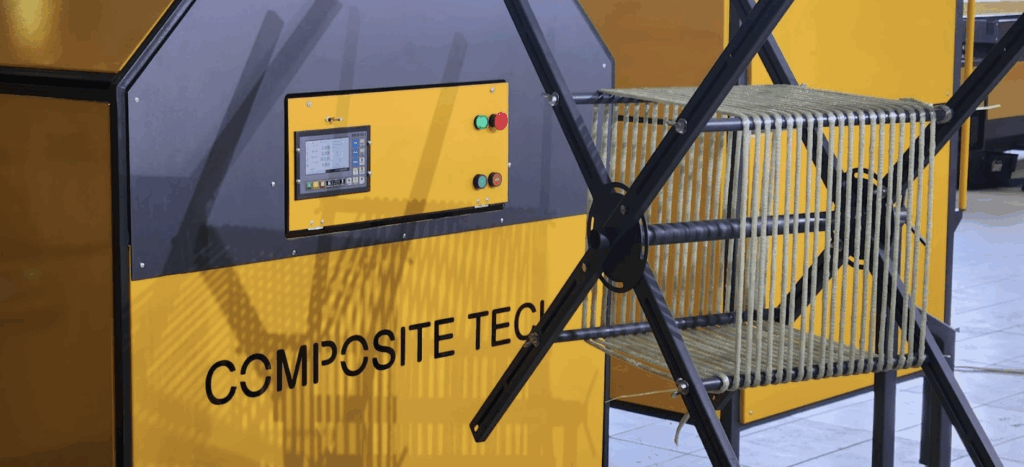
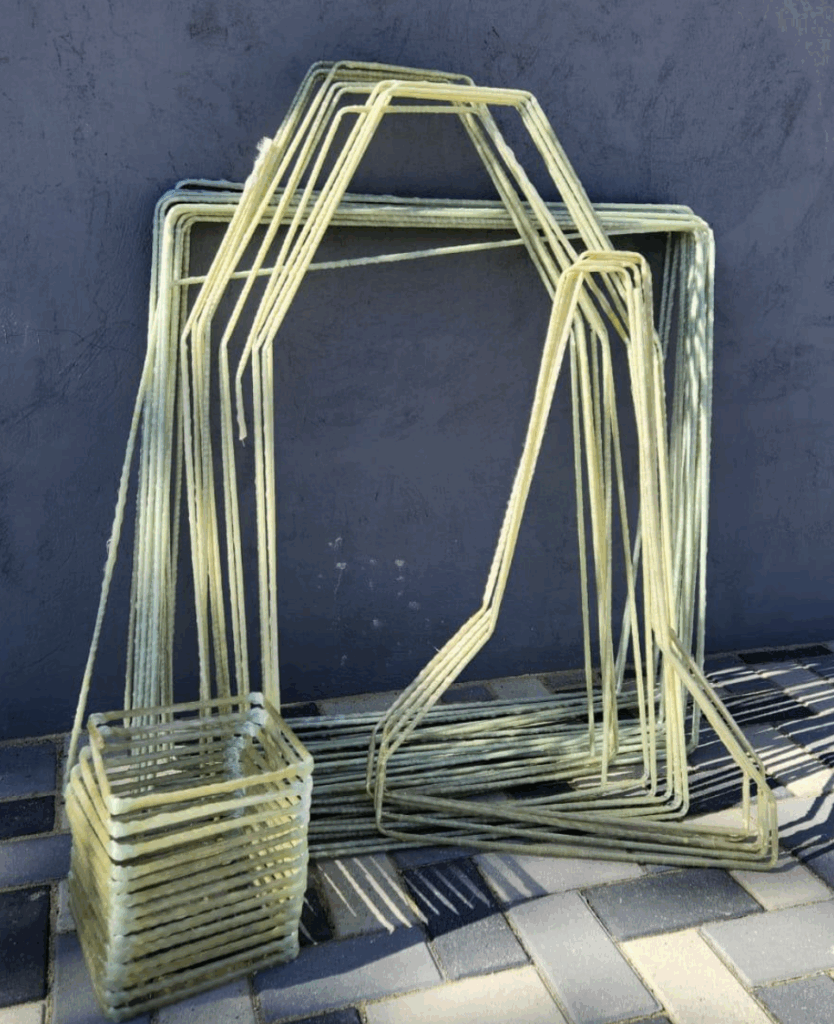
While many companies around the world manufacture straight GFRP rebars, only Composite-Tech has developed unique equipment for producing GFRP bent elements – a technology that has no analogues anywhere in the world. This GFRP bent elements machine is a true game-changer, enabling the production of stirrups, hooks, curved rebars, and other custom-shaped elements that significantly expand the application range of composite reinforcement.
In this article, we take a closer look at what makes this technology so innovative, how it can address the evolving needs of the U.S. construction market, and how Composite-Tech is advancing the global composite reinforcement industry through cutting-edge manufacturing solutions.

The Limitations of Traditional Reinforcement Technologies
For many decades, steel has been the standard material for reinforcing concrete structures. Despite its widespread use, conventional steel reinforcement comes with several significant drawbacks that can affect construction costs, structural longevity, and overall performance.
- Corrosion: Exposure to moisture, chemicals, salts, and other aggressive substances causes steel to corrode over time. This weakens reinforced concrete structures and shortens the service life of critical infrastructure, including bridges, highways, and marine facilities.
- High weight: Steel reinforcement is relatively heavy, making transportation, and installation more demanding and expensive.
- Magnetic interference: Steel’s magnetic properties can create interference with sensitive electronic equipment, restricting its use in specialized facilities such as hospitals, airports, and research laboratories.
- Limited durability in extreme environments: In coastal regions, underground tunnels, wastewater treatment facilities, and other chemically aggressive environments, steel reinforcement is particularly vulnerable to premature deterioration.
GFRP (Glass Fiber Reinforced Polymer) rebar offers an effective alternative, addressing many of the limitations associated with traditional steel reinforcement. Its corrosion resistance, lightweight properties, and durability make it an attractive solution for a wide range of construction applications.
However, despite the growing adoption of straight GFRP rebars, one major technological limitation has restricted their broader use: the difficulty of producing complex-shaped reinforcement elements at an industrial scale.
Applications requiring stirrups, and curved reinforcement have traditionally presented a significant manufacturing challenge for the composite reinforcement industry.
Composite-Tech is changing this landscape by bringing advanced GFRP bending technology to the market, removing one of the key barriers to the widespread adoption of composite reinforcement.
Why the U.S. Construction Industry Needs This Technology
The United States is facing a growing infrastructure challenge as a significant portion of its existing bridges, highways, tunnels, and water management facilities are reaching the end of their service life. According to the American Society of Civil Engineers (ASCE), more than 42% of U.S. bridges are over 50 years old, highlighting the urgent need for durable, long-term construction solutions.
In this context, adopting advanced materials such as Glass Fiber Reinforced Polymer (GFRP) can play an important role in modernizing American infrastructure. Thanks to its corrosion resistance, lightweight properties, and non-magnetic characteristics, GFRP reinforcement offers considerable advantages in projects where conventional steel may be less suitable.
The ability to manufacture bent GFRP elements is particularly important for several key construction sectors:
- Seismic reinforcement in earthquake-prone regions like California.
- Bridge and highway construction, where stirrups and hooks are essential.
- Coastal infrastructure, where corrosion-resistant bent rebar prevents structural failures caused by saltwater.
- Nuclear and medical facilities, where non-magnetic reinforcement is critical.
Composite-Tech’s advanced bent GFRP rebar manufacturing equipment gives American manufacturers access to new production capabilities, allowing them to create complex reinforcement shapes that were previously difficult to produce at an industrial scale.
Composite-Tech GFRP Bent Elements Machine: Unique Features and Advantages
Unlike conventional reinforcement bending solutions, Composite-Tech has developed a specialized industrial machine engineered specifically for processing GFRP composite rebar. This advanced technology addresses the challenges of shaping composite reinforcement while maintaining production efficiency and material performance.
Key technical features
- Precision automation – fully computerized control ensures consistent geometry of every stirrup or hook.
- High productivity – capable of producing hundreds of bent elements per hour.
- Material integrity – bending without damaging fibers, maintaining maximum tensile strength.
- Durability – designed for continuous industrial operation with minimal maintenance.
- Customization – adjustable for various diameters, bend radii, and element shapes.
The Composite-Tech GFRP Bent Elements Machine represents more than an advancement in manufacturing equipment. It is a specialized technological solution backed by extensive engineering expertise, proprietary developments, and a global portfolio of more than 100 patents.
GFRP Bent Elements Over Steel
The advantages of composite reinforcement have been extensively explored and confirmed by numerous research studies. When paired with advanced bending technology, GFRP bent elements unlock even greater potential, offering a range of significant benefits that make them a compelling alternative to conventional steel reinforcement:
| Property | Steel Rebar | GFRP Bent Elements |
| Service life | 20–40 years (with corrosion risk) | 100+ years (corrosion-resistant) |
| Weight | Heavy (7.8 g/cm³) | 4–5 times lighter (1.9 g/cm³) |
| Corrosion resistance | Prone to rusting | 100% corrosion-resistant |
| Strength-to-weight ratio | Moderate | Very high |
| Installation costs | High (requires heavy lifting) | Reduced (easy handling) |
| Magnetic/electrical neutrality | Conductive & magnetic | Non-conductive, non-magnetic |
In real-world terms, this means lighter transportation, faster installation, longer durability, and significant cost savings for American contractors and government infrastructure projects.
Why Composite-Tech is the Global Leader
Composite-Tech is not just another machinery supplier. The company is a pioneer in composite rebar technology, with more than 15 years of experience, delivering solutions to dozens of countries.
Unique advantages of Composite-Tech:
- Over 100 international patents protecting innovative equipment designs.
- Dedicated R&D team of engineers specializing in composites.
- Export presence in North America, Europe, Asia, and the Middle East.
- Trusted by leading construction companies worldwide, including large infrastructure projects.
- Comprehensive training and support, ensuring smooth integration of technology into production.
By investing in Composite-Tech’s FRP stirrup production line, American manufacturers and contractors gain access to an exclusive technology that cannot be replicated elsewhere.
The Future of Construction: From Steel to GFRP
The U.S. government is allocating billions of dollars to modernize infrastructure under programs such as the Infrastructure Investment and Jobs Act (IIJA). This presents a historic opportunity for the adoption of advanced composite materials.
The transition from steel to corrosion-resistant bent rebar will:
- Reduce life-cycle costs of infrastructure projects.
- Extend service life by decades.
- Minimize disruptions caused by premature structural failures.
- Contribute to sustainable and eco-friendly construction.
Composite-Tech’s composite rebar bending machine is the key technology that makes this transition possible on an industrial scale.
A Call to Action for U.S. Companies
The future of reinforcement technology is here, and it is happening now. Composite-Tech’s innovative rebar equipment is the only solution in the world that enables the production of GFRP bent elements with industrial precision and efficiency.
For U.S. construction companies, manufacturers, and investors, this represents a unique opportunity:
- Be the first in the American market to adopt a technology with no analogues.
- Offer corrosion-free, lightweight, and long-lasting solutions to clients.
- Participate in the transformation of U.S. infrastructure for the next 100 years.
Contact Composite-Tech-USA today to learn how you can implement this groundbreaking technology, purchase equipment, and bring the future of construction to the United States.