
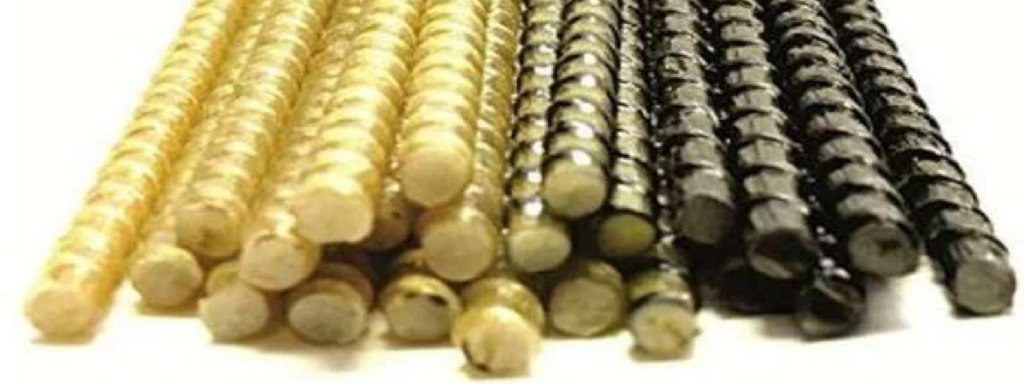
What if one industrial production line could manufacture more than 1.2 million linear feet of fiberglass reinforcement per month? And what if that equipment required only one or two operators during normal production?
For American entrepreneurs, construction material distributors, and industrial investors, fiberglass rebar manufacturing offers an opportunity to build a specialized production business serving the U.S. construction industry. The concept is straightforward. Purchase industrial GFRP rebar manufacturing equipment, establish a production facility, secure raw materials, and supply fiberglass reinforcement to contractors, distributors, and concrete product manufacturers. But a profitable operation depends on much more than simply buying a machine.
The real questions are:
- How much does it cost to manufacture fiberglass rebar in the United States?
- How much production capacity does a factory actually need?
- Can automated equipment reduce manufacturing costs enough to compete with established suppliers?
- And how much revenue could a well-organized fiberglass rebar manufacturing business generate?
At Composite-Tech, we develop industrial equipment specifically for manufacturing glass fiber reinforced polymer (GFRP) reinforcement. Our CT2, CT4, and CT6 production lines are designed for automated industrial manufacturing, controlled energy consumption, and extended production schedules.
This guide examines the opportunity from an American business owner’s perspective, using U.S. customary units, practical manufacturing calculations, and financial scenarios.
The Business Opportunity: Manufacturing Fiberglass Rebar in America
The United States has an established construction materials industry with extensive distribution networks, specialized contractors, precast concrete manufacturers, and infrastructure suppliers. For decades, steel reinforcement has been the standard material used in reinforced concrete. However, steel corrosion remains a major durability concern, particularly in environments exposed to chlorides, moisture, and aggressive chemicals. Fiberglass rebar offers an alternative for suitable applications.
Unlike carbon steel reinforcement, glass fiber reinforced polymer bars do not rust. They are also lightweight, electrically non-conductive, and capable of high longitudinal tensile strength. These properties make GFRP reinforcement relevant to applications such as bridge decks, coastal structures, parking facilities, wastewater infrastructure, and selected precast concrete products.
GFRP is not a universal replacement for steel. Its stiffness, failure behavior, and engineering requirements differ from those of conventional reinforcement. Nevertheless, the material creates opportunities for manufacturers serving projects where corrosion resistance and other properties of nonmetallic reinforcement are valuable.
Why Local Manufacturing Can Be Attractive
An American distributor purchasing finished reinforcement from another supplier must consider the product price, transportation, delivery schedules, and inventory. A domestic manufacturer can potentially offer advantages through local production and greater control over delivery. These may include shorter replenishment times, the ability to manufacture specified lengths, closer relationships with customers, and more responsive production planning.
For companies already distributing construction materials, establishing fiberglass rebar manufacturing can provide another source of revenue. Instead of selling only products manufactured by third parties, the business gains control over an additional stage of the supply chain. The opportunity becomes particularly interesting when efficient production equipment allows a manufacturer to produce substantial quantities without a large direct production workforce.
How Much Does Fiberglass Rebar Manufacturing Equipment Cost?
The initial investment is one of the first questions prospective manufacturers ask. Fiberglass rebar production equipment varies in price depending on manufacturing capacity, automation, equipment configuration, and technical capabilities.
Composite-Tech offers industrial production lines for businesses with different production requirements.
- The CT2 provides a more compact manufacturing configuration.
- The CT4 offers greater simultaneous output.
- The CT6 New Generation is intended for high-capacity industrial production.
For investors planning a substantial U.S. manufacturing operation, the CT6 is particularly interesting because of its output potential.
A Practical Equipment Investment Example
For preliminary investment modeling, consider a Composite-Tech CT6 production line with an indicative equipment budget of $125,000. This is based on a previous commercial price reference, not a binding current quotation. The final price depends on the configuration and commercial terms.
A simplified initial investment budget might look like this:
| Investment Item | Illustrative Cost |
| Composite-Tech CT6 production line | $125,000 |
| Installation and operator training | $3,000 |
| Initial fiberglass roving supply | $500 |
| Initial resin supply | $750 |
| Allowance for factory setup, auxiliary equipment, logistics, and working capital | $50,750 |
| Total Illustrative Investment | $180,000 |
This is a preliminary investment illustration. It is not a turnkey estimate for every U.S. location. Commercial property costs, electrical installation, equipment transportation, import duties, insurance, certification, inventory, and working capital may change the total investment substantially. An American investor should request a project-specific quotation before developing a final business plan.
The important point is that a high-capacity industrial manufacturing line can form the core of a factory without requiring a large number of separate production machines.
Industrial Production Capacity: More Than 1.2 Million Feet Per Month
The production capability of the equipment is one of the most important factors in a manufacturing investment. The Composite-Tech CT6 New Generation can manufacture six reinforcement bars simultaneously in the specified high-output configuration. At approximately 19.7 feet per minute per bar, combined production reaches approximately:
118.1 linear feet per minute.
That means:
| Production Period | Theoretical Output |
| One minute | 118 linear feet |
| One hour | 7,087 linear feet |
| One 8-hour shift | 56,693 linear feet |
| One month, 22 shifts | 1,247,244 linear feet |
| One year, 264 shifts | 14,966,929 linear feet |
These figures are based on the production configuration discussed in this guide, which manufactures reinforcement close to the nominal American #3 size. They should not automatically be treated as guaranteed performance for an ASTM-compliant #3 bar.
The actual production rate must be verified for the selected American bar specification, resin formulation, and equipment configuration. The calculations also assume operation at the stated rate without downtime. Real factories must account for maintenance, material changes, startup cycles, and quality control.
Why This Capacity Matters
A manufacturer does not need to sell the entire theoretical production capacity immediately. The factory might initially produce only enough material to support regional distributors. As customer demand develops, production can increase.
A higher-capacity machine allows the manufacturer to expand output without immediately purchasing another complete production line. This flexibility is particularly valuable for a business planning long-term expansion. The opportunity is not simply to build a factory capable of producing fiberglass rebar. It is to build a factory with sufficient capacity to support significant future sales.
Manufacturing Cost Per Foot: Understanding the Real Economics
For American manufacturers, the most relevant unit of measurement is usually cost per linear foot. A buyer may ask for the wholesale price of #3 fiberglass rebar. A distributor may request a price for a truckload. An industrial manufacturer, however, must understand the cost of producing each acceptable foot of reinforcement.
That calculation begins with raw materials. Fiberglass rebar consists primarily of glass fiber roving and a polymer resin matrix. For this financial example, we use a simplified composition containing approximately 80% glass fiber and 20% resin by weight. The actual formulation may require additional ingredients and must be validated for the intended product specification.
Raw Material Purchase Prices
The illustrative supply prices are:
| Material | Cost per Pound |
| Fiberglass roving | $0.23 |
| Polymer resin | $1.36 |
At the assumed composition, the weighted cost of the two principal ingredients is approximately: $0.45 per pound of finished composite.
This calculation does not include additives, curing components, production losses, or manufacturing overhead.
How Much Does One Foot of #3-Size Fiberglass Rebar Cost?
For the illustrative manufacturing configuration, assume the finished reinforcement weighs approximately 0.106 pounds per linear foot.
At the stated raw material prices: Principal material cost: approximately $0.048 per linear foot.
In other words, the glass fiber and resin required for one linear foot of the modeled reinforcement cost approximately 4.8 cents. Actual cost will depend on the finished bar’s weight, formulation, profile, and production losses. This estimate should not be treated as the exact material cost of every commercially available #3 GFRP product. Nevertheless, it illustrates an important characteristic of fiberglass reinforcement manufacturing.
Raw material costs can represent only a portion of the final selling price, leaving room for an efficient manufacturer to cover operating expenses and generate a manufacturing margin.
What Does Fiberglass Rebar Sell for in the United States?
The selling price is one of the most important variables in a manufacturing business plan. American fiberglass rebar prices vary by diameter, supplier, quantity, product specification, and delivery conditions. Retail prices are not necessarily representative of the prices manufacturers receive when selling to large distributors. A factory supplying substantial volumes may need to negotiate significantly different commercial terms.
For the calculations in this guide, we will use a hypothetical manufacturer selling price of: $0.2286 per linear foot.
This is a financial modeling assumption rather than a verified national wholesale average. The purpose is to demonstrate how production economics change as manufacturing volume increases.
Example Revenue at Different Selling Prices
Suppose a manufacturer sells 500,000 linear feet of reinforcement per month.
| Average Selling Price | Monthly Revenue |
| $0.20 per foot | $100,000 |
| $0.23 per foot | $115,000 |
| $0.30 per foot | $150,000 |
| $0.40 per foot | $200,000 |
This table highlights why developing strong distribution relationships is essential. Small differences in the selling price per foot can create significant differences in revenue when a factory operates at industrial production volumes. A manufacturer should therefore evaluate both production efficiency and the commercial opportunities available in its target region.
Can a Fiberglass Rebar Factory Generate $250,000 per Month?
Yes, a factory with sufficient capacity can mathematically support that level of revenue. Whether it actually achieves it depends on the volume sold and the selling price.
Consider the CT6 manufacturing configuration. Its theoretical monthly production capacity is approximately 1,247,244 linear feet under the specified single-shift schedule. At an illustrative selling price of $0.2286 per foot, selling approximately 1.09 million feet would generate around $250,000 in monthly revenue. That production volume is within the machine’s stated theoretical capacity.
However, producing more than one million feet and selling more than one million feet are two different business challenges. The manufacturer must have enough customers to absorb the production. For this reason, we recommend developing distribution relationships before establishing full production capacity.
Five Revenue Scenarios
The following examples illustrate how monthly revenue changes at different levels of production utilization.
The percentage sold refers to the share of manufactured output sold during the month.
| Business Stage | Capacity Utilization | Share of Output Sold | Approximate Monthly Sales | Monthly Revenue |
| Market entry | 25% | 90% | 280,630 ft | $64,152 |
| Regional growth | 50% | 95% | 592,441 ft | $135,432 |
| Established manufacturer | 75% | 95% | 888,662 ft | $203,148 |
| High-volume production | 90% | 95% | 1,066,394 ft | $243,778 |
| Theoretical maximum | 100% | 100% | 1,247,244 ft | $285,120 |
Revenue calculations use the unrounded underlying selling-price assumption and production volumes. They are illustrative scenarios, not actual financial results achieved by Composite-Tech customers. Maximum theoretical production is included to demonstrate equipment capacity, not to represent a realistic normal operating schedule.
What Should a U.S. Manufacturer Learn From These Numbers?
The most important conclusion is that high production capacity creates commercial flexibility. A manufacturer can begin at lower utilization and increase output as customer demand grows.
A well-established business can also pursue larger orders without immediately investing in another complete production system. But high output has value only when there is sufficient market demand. The strongest manufacturing businesses combine productive equipment with reliable distribution.
The Difference Between Revenue and Profit
When evaluating a fiberglass rebar manufacturing business, it is important to distinguish revenue from profit. Revenue represents the amount customers pay for finished reinforcement. Profit depends on what remains after the business covers its costs.
For this example, consider the following simplified assumptions:
| Financial Parameter | Illustrative Value |
| Average selling price | $0.2286 per foot |
| Principal raw materials | $0.0479 per foot |
| Additional variable production allowance | $0.0122 per manufactured foot |
| Factory electricity tariff | $0.15 per kWh |
| Production line electrical power | 20 kW |
| Monthly fixed expense allowance | $15,000 |
At the stated production rate, the calculated production-line electricity expense is approximately $0.00042 per manufactured foot. The fixed expense allowance is hypothetical and should be replaced with actual costs for the intended U.S. facility.
These figures exclude various expenses that could materially affect the business, including some quality assurance, certification, maintenance, distribution, financing, taxes, depreciation, and working capital costs.
An Example at High Production Utilization
Suppose the factory manufactures approximately 1.12 million linear feet during the month and sells 95% of that production. At the assumed selling price, monthly revenue would be approximately $244,000. Principal raw materials, modeled variable production expenses, line electricity, and the fixed expense allowance would reduce the available cash contribution. Under these simplified assumptions, the resulting monthly operating contribution would be approximately $161,000.
This is not verified net profit. It is a hypothetical planning result intended to show the sensitivity of a manufacturing business to production volume, selling prices, and operating expenses. An American investor should develop a complete cash-flow model using actual local costs before making an investment decision.
Why Equipment Efficiency Has Such a Large Financial Impact
When comparing fiberglass rebar manufacturing machines, investors often focus on the initial purchase price. That is understandable, but it can lead to the wrong decision. Imagine purchasing a low-cost production line that requires significantly more operating hours to complete the same orders. Even if its initial purchase price is lower, the factory may face higher labor costs per foot, higher energy expenses, and less capacity to accept additional orders. The right comparison is not simply equipment price. It is the total cost of manufacturing an acceptable finished product.
Composite-Tech develops industrial production equipment with this objective in mind. Our manufacturing systems are designed to combine high output, controlled processing, low direct labor requirements, and efficient use of electricity. The result is a production platform intended to support competitive manufacturing economics over many years.
Electricity Cost Per Foot: Why CT6 Is Built for Efficient Production
Electricity is a recurring operating expense.
For the specified CT6 configuration, indicative average operating consumption is approximately 18–20 kW.
At an assumed 20 kW and a production rate of approximately 7,087 linear feet per hour: Calculated electricity consumption is approximately 0.00282 kWh per foot.
At a hypothetical electricity tariff of $0.15 per kWh: Production-line electricity cost is approximately $0.00042 per foot.
The actual factory electricity expense will be higher when external compressors, ventilation, startup cycles, and other auxiliary loads are included. These values are calculated from the supplied operating assumptions, not an independently verified factory energy audit. Nevertheless, they demonstrate the importance of measuring electricity consumption relative to finished production volume. A machine with high output can distribute its energy use across more finished products.
For American manufacturers, the relevant question is not simply how much electricity a machine consumes. It is how much electricity the business consumes for each acceptable foot of fiberglass rebar it sells.
Industrial Automation: High Output With One or Two Operators
Labor is a major consideration for industrial businesses operating in the United States. Hiring, training, payroll administration, and employee benefits all affect manufacturing costs.
Composite-Tech production lines are designed so that routine production can typically be supervised by one or two trained operators, depending on equipment configuration and workflow. The equipment integrates fiber feeding, resin impregnation, reinforcement forming, curing, cooling, and final processing. This reduces the need for manual intervention at every manufacturing stage.
Additional factory personnel may be necessary for quality assurance, equipment maintenance, material handling, packaging, and administration. However, the direct production labor requirement remains relatively low compared with the equipment’s potential output. For a factory owner, this can create a meaningful advantage. The production system is designed to generate substantial output without requiring a proportionate increase in the number of people operating the line.
Industrial automation is not simply about reducing headcount. It is about increasing the quantity of acceptable finished product produced per paid labor hour.
Three Composite-Tech Technologies That Support Manufacturing Quality
High production capacity is valuable only when the finished reinforcement satisfies the required product specifications. Composite-Tech has developed specialized processing technologies intended to improve consistency during fiberglass reinforcement manufacturing.
Ultrasonic-Assisted Resin Impregnation
A fiberglass reinforcement bar contains numerous continuous glass filaments held together by a polymer resin matrix. Effective impregnation is essential to creating a consolidated composite material.
Composite-Tech uses ultrasonic-assisted impregnation technology designed to improve resin penetration into the reinforcing fiber bundles. The system works together with controlled resin processing and excess-resin removal. Its objective is to improve manufacturing consistency and reduce the risk of internal defects caused by inadequate impregnation. For a commercial manufacturer, this matters because rejected material creates additional costs.
Short-Wave Infrared Polymerization Booster
Curing is another critical stage in manufacturing fiberglass reinforcement. The polymer resin must achieve the required curing conditions without undesirable overheating.
Composite-Tech incorporates a short-wave infrared booster as part of its production process. The system is designed to provide controlled heating and initiate polymerization before subsequent curing stages. This approach is intended to support consistent curing and reduce the risk of excessive surface temperatures. Actual heat distribution depends on the resin formulation, bar dimensions, and operating conditions.
Two-Stage Air and Water Cooling
Cooling also influences the finished product. Rapid temperature changes can create thermal stresses within composite materials.
Composite-Tech uses a two-stage system that begins with air cooling and continues with water cooling. The purpose is to create a more controlled thermal transition and reduce the risk of cooling-related defects. Together, these technologies form part of Composite-Tech’s proprietary engineering approach.
For American manufacturers targeting professional construction markets, consistent processing is particularly important because product performance must be demonstrated through appropriate testing and quality documentation.
Designed for Continuous Industrial Manufacturing
Composite-Tech production lines are engineered for extended industrial operation. The equipment is intended to support continuous manufacturing schedules, including multi-shift operation when properly maintained. This creates opportunities for manufacturers that need to increase production as their customer base expands. For example, a business may begin with one production shift and later introduce a second shift. The same installed equipment can then support additional manufacturing output.
With appropriate maintenance and replacement of wear components, Composite-Tech designs its industrial machinery around a target service life of approximately 15 years. Actual equipment life depends on operating conditions and maintenance practices. For investors, this means that equipment selection should be viewed as a long-term business decision. A production line is not simply a startup expense. It is the principal productive asset of the manufacturing company.
What Kind of Building Do You Need for a Fiberglass Rebar Factory?
A fiberglass rebar production facility requires a suitable industrial layout. For the specified Composite-Tech line configuration, the main equipment installation envelope is approximately: 118 feet long and 12.5 feet wide. The equipment itself occupies approximately 1,472 square feet. However, that is not the total factory area. Additional space is needed for material storage, maintenance access, operators, product handling, packaging, and auxiliary equipment. A suitable facility must also provide the necessary electrical infrastructure, ventilation, compressed air, and safe chemical storage arrangements.
For a U.S. project, the building should be assessed against applicable local fire, electrical, environmental, and occupational safety requirements. Before purchasing equipment, investors should confirm that the planned facility can accommodate the production line and the complete manufacturing workflow.
Installation and Operator Training
Purchasing equipment is only one part of establishing a successful manufacturing business. The customer’s team must understand the production technology and be capable of operating the equipment correctly. Composite-Tech provides installation, commissioning, and practical operator training.
A typical program takes approximately seven to ten days when the production facility is ready. The training covers equipment operation, material handling, manufacturing adjustments, routine maintenance, and basic quality control procedures. The objective is to prepare operators to manage production independently and manufacture reinforcement according to the agreed requirements. Successful commissioning should be verified through practical production trials and quality checks.
An indicative installation and training budget is approximately $3,000, depending on the agreed scope. Initial commissioning materials may include approximately 2,205 pounds of fiberglass roving and 440–550 pounds of polymer resin. Air compressors and other auxiliary equipment are generally arranged separately.
Manufacturing Fiberglass Rebar for the U.S. Construction Market
An American fiberglass rebar manufacturer must think beyond manufacturing capacity. Professional buyers require products with documented properties, consistent dimensions, and appropriate quality assurance.
The technical framework for GFRP reinforcement in the United States includes standards and codes addressing product requirements and structural design.
For example, ASTM D7957/D7957M-26 establishes specifications for GFRP bars used in concrete reinforcement. ACI CODE-440.11-22 provides requirements for structural concrete reinforced with GFRP bars within the scope of that code.
Manufacturers must confirm the applicable requirements for their intended products and projects. This is particularly important when selling reinforcement under standard American size designations.
#3, #4, and #5 Fiberglass Rebar
American buyers commonly identify reinforcing bars using numbered size designations.
The nominal diameters are:
| U.S. Rebar Size | Nominal Diameter |
| #3 | 3/8 inch |
| #4 | 1/2 inch |
| #5 | 5/8 inch |
| #6 | 3/4 inch |
| #8 | 1 inch |
Production equipment must be configured to manufacture the required sizes and meet the applicable product specifications. A bar manufactured in a nearby nominal size should not automatically be marketed as an ASTM-compliant American size without confirming its geometry and performance. For a serious American manufacturer, accurate sizing and product documentation are essential.
How to Sell Fiberglass Rebar in the United States
Equipment capacity creates the opportunity to manufacture. The sales network determines how much of that output becomes revenue. For a new U.S. fiberglass rebar manufacturer, customer development should begin before full-scale production.
Potential buyers include construction material distributors, precast concrete companies, infrastructure contractors, and specialized building product suppliers. A practical commercial strategy may include establishing regional distribution agreements and working directly with manufacturers of concrete products. For companies already operating in the construction materials industry, existing customer relationships can provide a valuable starting point.
Why Distribution Matters More Than Maximum Production Speed
Consider a factory capable of manufacturing more than one million linear feet per month. That production capacity is commercially valuable only if the company can consistently sell a substantial portion of its output. A manufacturer should therefore evaluate the number of distributors, average order quantities, inventory turnover, and payment terms required to support its planned production schedule.
The most successful industrial investments are not based on machinery specifications alone. They combine reliable equipment with a realistic market-entry strategy. Composite-Tech can support equipment selection and factory commissioning, while the manufacturer develops its commercial operations around regional demand.
Why American Investors Should Consider Composite-Tech
Composite-Tech specializes in industrial equipment for manufacturing fiber-reinforced polymer products. Its portfolio includes production lines for fiberglass rebar, composite reinforcement mesh, bent elements, and related products.
The company’s engineering approach emphasizes several factors relevant to American manufacturers.
- Production capacity. Multi-bar manufacturing systems can provide substantial output from one production line.
- Automation. Normal line operation typically requires only one or two trained operators.
- Energy efficiency. Coordinated processing is designed to reduce electricity consumption per foot of finished product.
- Industrial durability. Equipment is engineered for extended manufacturing schedules.
- Controlled processing. Specialized impregnation, curing, and cooling technologies are intended to support consistent product quality.
- Long-term business development. Higher-capacity equipment creates opportunities to expand production as customer demand increases.
For investors, these characteristics matter because the production line will influence manufacturing costs throughout the life of the business. The appropriate comparison between equipment suppliers is not simply the initial machine price. It is the combination of purchase cost, production capacity, operating expenses, product quality, technical support, and long-term reliability.
Build Your Fiberglass Rebar Manufacturing Business With Composite-Tech
A successful fiberglass rebar manufacturing business requires more than access to affordable raw materials. It requires industrial equipment capable of producing consistent reinforcement efficiently, a properly organized factory, and a reliable sales network.
Composite-Tech develops manufacturing systems designed around these requirements. Our CT2, CT4, and CT6 production lines combine automated processing, industrial construction, specialized composite technologies, and scalable production capacity.
For American investors planning a substantial manufacturing operation, the CT6 New Generation offers an opportunity to establish high-capacity fiberglass reinforcement production using a single integrated industrial line. The equipment’s theoretical output demonstrates the potential scale of the business. The actual financial results will depend on product specifications, manufacturing performance, market demand, and commercial execution.
The objective is not simply to purchase a fiberglass rebar machine. It is to establish a competitive manufacturing business capable of serving the American construction industry for years to come.
Ready to Start Manufacturing Fiberglass Rebar in the USA?
Composite-Tech can help you evaluate the production equipment and factory requirements for your project. Contact our team to discuss equipment capacity, production planning, installation, and operator training.
Request a Commercial Proposal for Composite-Tech Industrial Fiberglass Rebar Manufacturing Equipment.
Composite-Tech USA — Industrial Equipment for Fiberglass Rebar, Composite Mesh, and Bent Reinforcement Manufacturing.
Frequently Asked Questions
Is fiberglass rebar manufacturing a good business in the USA?
It can be an attractive manufacturing opportunity when a company has sufficient demand, appropriate production equipment, and a competitive cost structure. Actual profitability depends on the regional market, selling prices, production utilization, and total operating expenses.
How much does a fiberglass rebar production line cost?
Equipment prices depend on the production capacity and configuration. Composite-Tech offers CT2, CT4, and CT6 manufacturing systems. The financial examples in this guide use an indicative $125,000 equipment budget for CT6, but buyers should request an updated commercial quotation.
How much does it cost to manufacture #3 fiberglass rebar per foot?
The simplified raw material model in this guide gives approximately $0.048 per linear foot for a bar close to #3 size. This represents the principal glass fiber and resin inputs, not the total manufacturing cost of an ASTM-compliant #3 product.
Can one fiberglass rebar production line manufacture one million feet per month?
The specified Composite-Tech CT6 configuration has a theoretical capacity exceeding 1.2 million linear feet per month under an eight-hour, 22-day production schedule. Actual output depends on product specifications, machine settings, quality acceptance, and operating conditions.
How many workers are needed to operate a GFRP rebar manufacturing line?
One or two trained operators can typically supervise routine line production. Additional personnel may be needed for maintenance, quality control, packaging, administration, and logistics.
Is fiberglass rebar cheaper to manufacture than steel rebar?
Manufacturing economics depend on material prices, equipment, product specifications, labor, electricity, and production scale. A meaningful comparison must account for all relevant costs rather than only the price of the principal raw materials.
How much revenue can a fiberglass rebar factory generate?
Revenue depends on production volume and selling price. Under the illustrative assumptions in this guide, a high-capacity production line could theoretically support monthly sales exceeding $250,000. Actual revenue depends on the ability to manufacture and sell the stated volume.
Can a fiberglass rebar factory recover its investment in less than one year?
A short payback period is mathematically possible under favorable conditions, but it is not guaranteed. Investors should evaluate demand, startup expenses, certification, operating costs, inventory, financing, and customer payment terms.
Can Composite-Tech equipment operate continuously?
Composite-Tech production lines are designed for industrial operation, including extended and multi-shift schedules, subject to appropriate maintenance and operating procedures.
Does Composite-Tech provide installation and training?
Yes. Composite-Tech provides installation, commissioning, and practical operator training. The typical program takes approximately seven to ten days when the factory is properly prepared.
Learn more: